
best cms for hvac website
The Best CMS Setup for HVAC Service Pages and Blogs
Book a free audit call


Why Does Choosing the Right CMS Matter for HVAC Websites?
An HVAC website is more than an online brochure. It needs to attract homeowners searching for services, answer customer questions, showcase expertise, and convert visitors into phone calls and appointment requests.
The CMS behind the website determines how easily HVAC companies can create new service pages, update information, publish blogs, improve SEO, and scale their online presence.
A poorly selected CMS can create limitations with website speed, content management, integrations, and future growth. A well-planned CMS setup allows HVAC businesses to build a website that supports long-term marketing goals.
What Features Should the Best CMS for an HVAC Website Include?
HVAC companies have unique website requirements compared to many other industries. Their websites usually need multiple service pages, location pages, seasonal content, booking forms, reviews, and marketing integrations.
The ideal CMS should include the following capabilities:
- Easy service page management
- SEO-friendly page structures
- Fast loading performance
- Mobile optimization
- Blog publishing capabilities
- Local SEO support
- Lead generation integrations
- Analytics and tracking support
These features help HVAC companies continuously improve their website without rebuilding the entire platform every time they need updates.
Is WordPress a Good CMS for HVAC Websites?
WordPress is one of the most commonly used CMS platforms for HVAC websites because of its flexibility and large ecosystem.
With the right development approach, WordPress can support:
- Custom HVAC service pages
- Location-based landing pages
- Educational blog content
- Review sections
- Booking forms
- CRM integrations
However, the performance of a WordPress HVAC website depends heavily on development quality. Excessive plugins, poor hosting, and unoptimized themes can slow down the website and affect user experience.
Can Headless CMS Solutions Improve HVAC Website Performance?
Modern HVAC companies looking for higher performance and scalability may consider headless CMS solutions.
A headless CMS separates the content management system from the website frontend, allowing developers to create faster and more flexible user experiences.
Benefits can include:
- Improved website speed
- Better scalability
- Flexible frontend development
- Enhanced user experiences
- Support for modern web technologies
This approach can be useful for HVAC companies that want advanced websites with custom functionality, integrations, and future growth opportunities.
How Does a CMS Support HVAC SEO Strategy?
A strong CMS makes it easier to implement SEO strategies that help HVAC companies appear in search results.
An effective HVAC CMS setup should support:
- Optimized service pages
- Location pages targeting specific areas
- Blog content addressing homeowner questions
- Internal linking between related pages
- Schema markup implementation
- Metadata optimization
For example, an HVAC company can create dedicated pages for AC repair, furnace installation, heat pump services, and emergency repairs while supporting each page with relevant educational content.
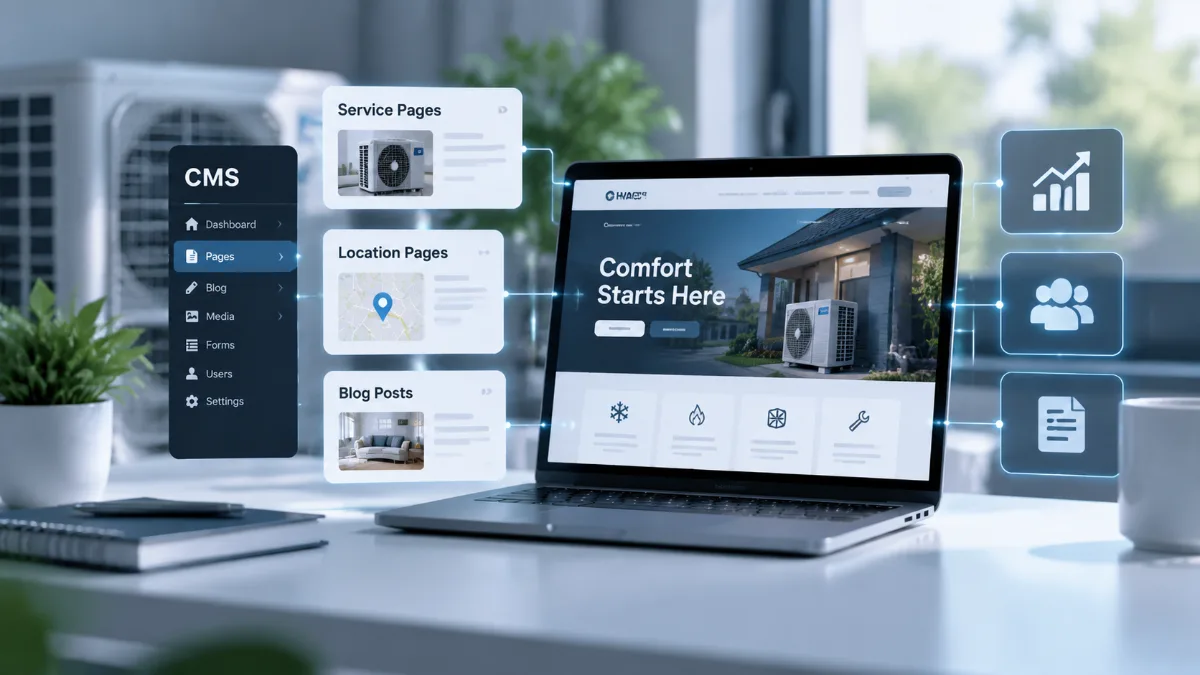
What CMS Structure Works Best for HVAC Service Pages and Blogs?
The CMS structure should match how customers search for HVAC services.
A strong HVAC website architecture typically includes:
Core Service Pages
These pages target customers who are ready to hire an HVAC company.
Examples:
- AC Repair
- Heating Installation
- HVAC Maintenance
- Air Quality Services
- Emergency HVAC Services
Location Pages
Location pages help HVAC contractors target searches from specific cities and service areas.
These pages can include:
- Service availability
- Local customer reviews
- Area-specific information
- Contact options
Educational Blog Content
Blogs help HVAC companies attract homeowners who are researching problems before making a decision.
Examples:
- Why is my AC not cooling?
- How often should HVAC filters be replaced?
- Signs your furnace needs repair
How Should HVAC Companies Choose Between Different CMS Platforms?
The best CMS depends on the company’s goals, budget, marketing strategy, and technical requirements.
Important factors to evaluate include:
- Website size and complexity
- Number of service locations
- Content publishing requirements
- SEO goals
- Integration requirements
- Future scalability
A small HVAC company may need a simple and manageable CMS, while a growing contractor operating in multiple locations may require a more advanced solution.
Common CMS Mistakes HVAC Companies Should Avoid
Selecting a CMS is only the first step. Poor implementation can limit website performance and lead generation.
Common mistakes include:
- Using heavy themes that slow down the website
- Installing unnecessary plugins
- Ignoring mobile performance
- Creating weak service pages
- Failing to organize content properly
- Not tracking conversions
A successful HVAC website requires both the right CMS and a strategic approach to design, development, SEO, and conversion optimization.
How DevPlus Media Builds CMS Solutions for HVAC Companies
DevPlus Media creates HVAC websites using CMS solutions designed around performance, scalability, SEO, and lead generation.
The approach focuses on building websites that include:
- Conversion-focused service pages
- SEO-ready content structures
- Fast and responsive experiences
- Custom integrations
- Analytics and tracking systems
The goal is to create a CMS foundation that allows HVAC businesses to grow their online presence while making it easier to manage content and generate qualified leads.
Build a High-Performance HVAC Website
Create an SEO-ready HVAC website with the right CMS structure to attract more homeowners and generate qualified service leads.
✦ FAQ
Frequently Asked Questions
Answers to the questions readers ask most about this topic.